Window vs Split AC Installation in NYC: What You Need to Know
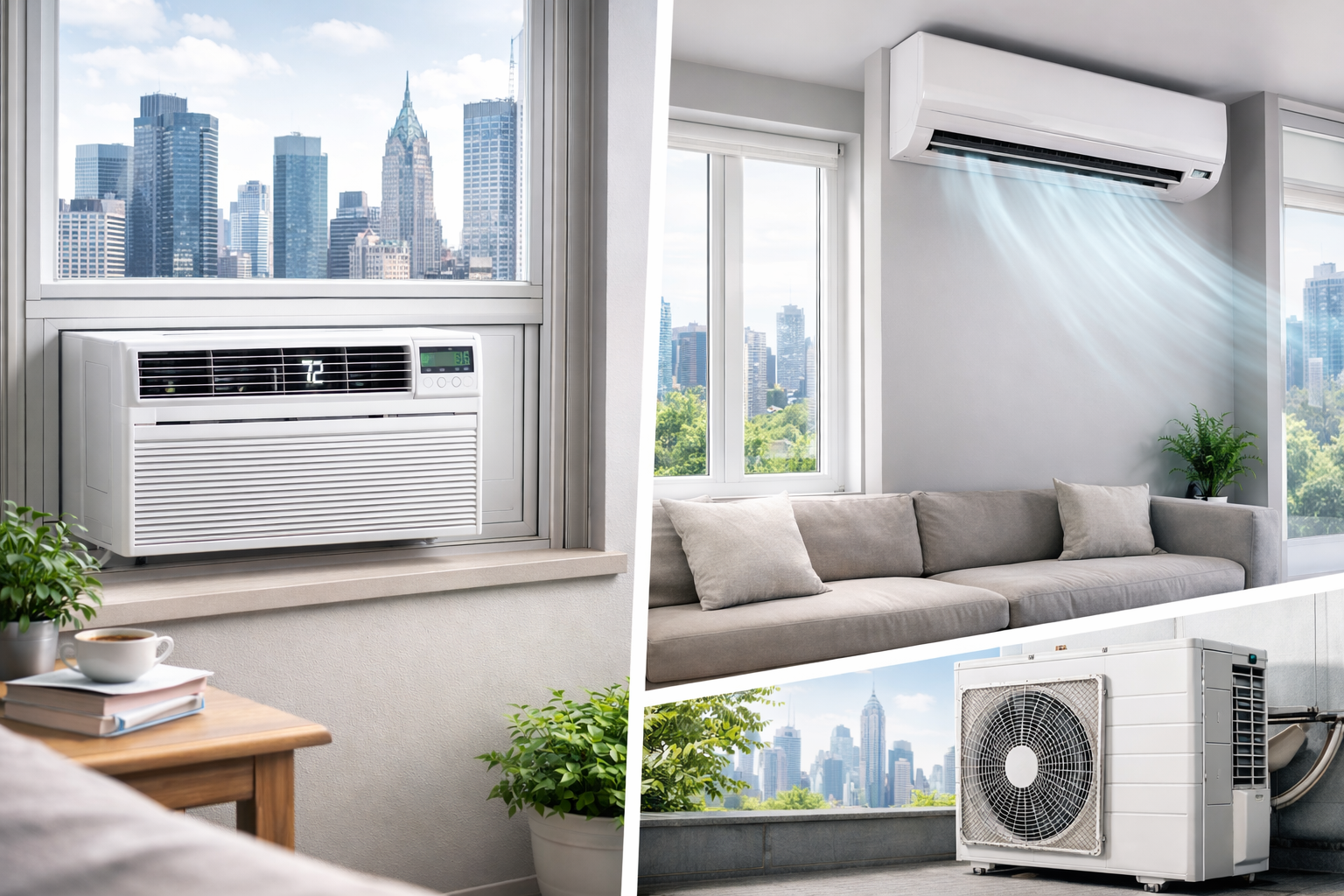
Choosing between a window air conditioner and a split system in New York City is not just a matter of preference — it often depends on the building, installation limitations, and long-term costs. While split systems are often seen as a more modern solution, window AC units remain the most practical and widely used option across NYC apartments.
In neighborhoods like Brooklyn, Queens, and the Bronx, where many buildings are older and were not designed for central or split HVAC systems, window air conditioners continue to be the most reliable and accessible choice. Even in parts of Manhattan, strict building regulations and installation restrictions can make split systems difficult or expensive to install.
Why Split Systems Are Not Always the Best Choice in NYC
At first glance, split systems may seem like a premium solution. They are quieter, more efficient in some cases, and visually cleaner inside the apartment. However, in real NYC conditions, they come with several serious drawbacks.
The biggest issue is installation complexity. A split system requires drilling through walls, running refrigerant lines, installing an outdoor condenser, and often obtaining approval from building management. In many co-op and condo buildings in Manhattan and Brooklyn, installing an external unit is either restricted or completely prohibited.
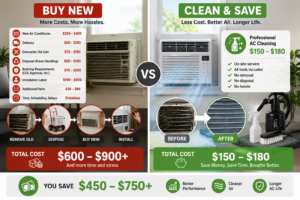
Cost is another major factor. A typical split system installation in NYC can cost several times more than a window unit. This includes equipment, labor, electrical work, and sometimes permits. Maintenance and repairs are also more expensive, especially if refrigerant lines or compressors need servicing.
Additionally, split systems are not always ideal for smaller apartments. In studios or one-bedroom units common in areas like Queens or older Brooklyn buildings, a properly sized window AC can provide sufficient cooling without the complexity and cost of a split system.
Why Window Air Conditioners Are Still the Most Practical Option
Window AC units remain the most common solution in New York for a reason — they are simple, effective, and adaptable to different types of buildings.
Installation is significantly easier and faster. In most cases, a window unit can be installed without major modifications to the structure, making it ideal for rental apartments and buildings with strict rules. This is especially important in Manhattan, where building compliance and safety requirements are taken seriously.
Window AC units are also more affordable, both in terms of upfront cost and maintenance. They can be replaced, serviced, or upgraded without major investment.
Another important advantage is flexibility. If you move apartments — which is common in NYC — you can take the unit with you. This is not possible with split systems.
Choosing the Right Window AC for Your Apartment Size
Selecting the correct size is critical for both performance and energy efficiency. An undersized unit will struggle to cool the space, while an oversized one may cycle inefficiently and increase energy consumption.
As a general guideline:
- Small rooms (up to 150 sq ft) → 5,000–6,000 BTU
- Medium rooms (150–300 sq ft) → 6,000–8,000 BTU
- Large rooms (300–500 sq ft) → 8,000–12,000 BTU
- Open spaces or living rooms → 12,000–15,000+ BTU
In NYC apartments, ceiling height, sun exposure, and insulation also play a role. For example, top-floor apartments in Brooklyn or Manhattan tend to require more powerful units due to heat accumulation.
Popular Window AC Brands in NYC
Some of the most commonly used and reliable brands in New York include:
- Midea (very popular for modern window designs)
- Frigidaire
- LG
- GE
Midea units, in particular, have become increasingly popular due to their quieter operation and improved energy efficiency, making them a good fit for apartments where noise is a concern.
Installation Matters More Than the Unit Itself
Even the best air conditioner will not perform properly if installed incorrectly. In NYC, improper installation can lead to air leaks, poor cooling, poor smell, water drainage issues, and even safety concerns.
This is especially important in buildings where secure mounting is required. Professional installation ensures proper sealing, correct angle for drainage, and compliance with local building standards.
Many apartment owners and tenants choose professional AC installation in NYC to avoid these common problems and ensure long-term performance.
Final Thoughts: What Works Best in NYC
While split systems may be suitable for private homes or new constructions, window air conditioners remain the most practical, cost-effective, and widely compatible solution for New York City apartments.
Understanding your building type, electrical capacity, and room size is key to making the right choice. In most cases, a properly selected and professionally installed window AC unit will provide reliable cooling without unnecessary complexity or expense.
In New York City, choosing the right air conditioner is only part of the equation. Proper installation, secure mounting, and regular maintenance play a critical role in long-term performance, energy efficiency, and safety — especially in older buildings across Brooklyn, Queens, and Manhattan.
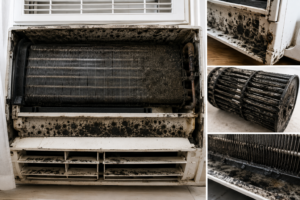
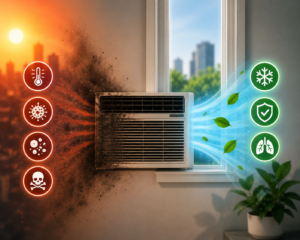
Professional installation helps prevent common issues such as air leaks, improper drainage, and reduced cooling efficiency. Regular cleaning and maintenance are equally important to avoid mold buildup and ensure consistent operation throughout the season.
Our team provides professional window AC installation, maintenance and window cleaning services across NYC, working with window units, through-the-wall systems, and modern solutions tailored to each apartment.