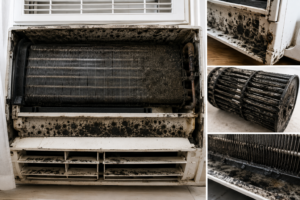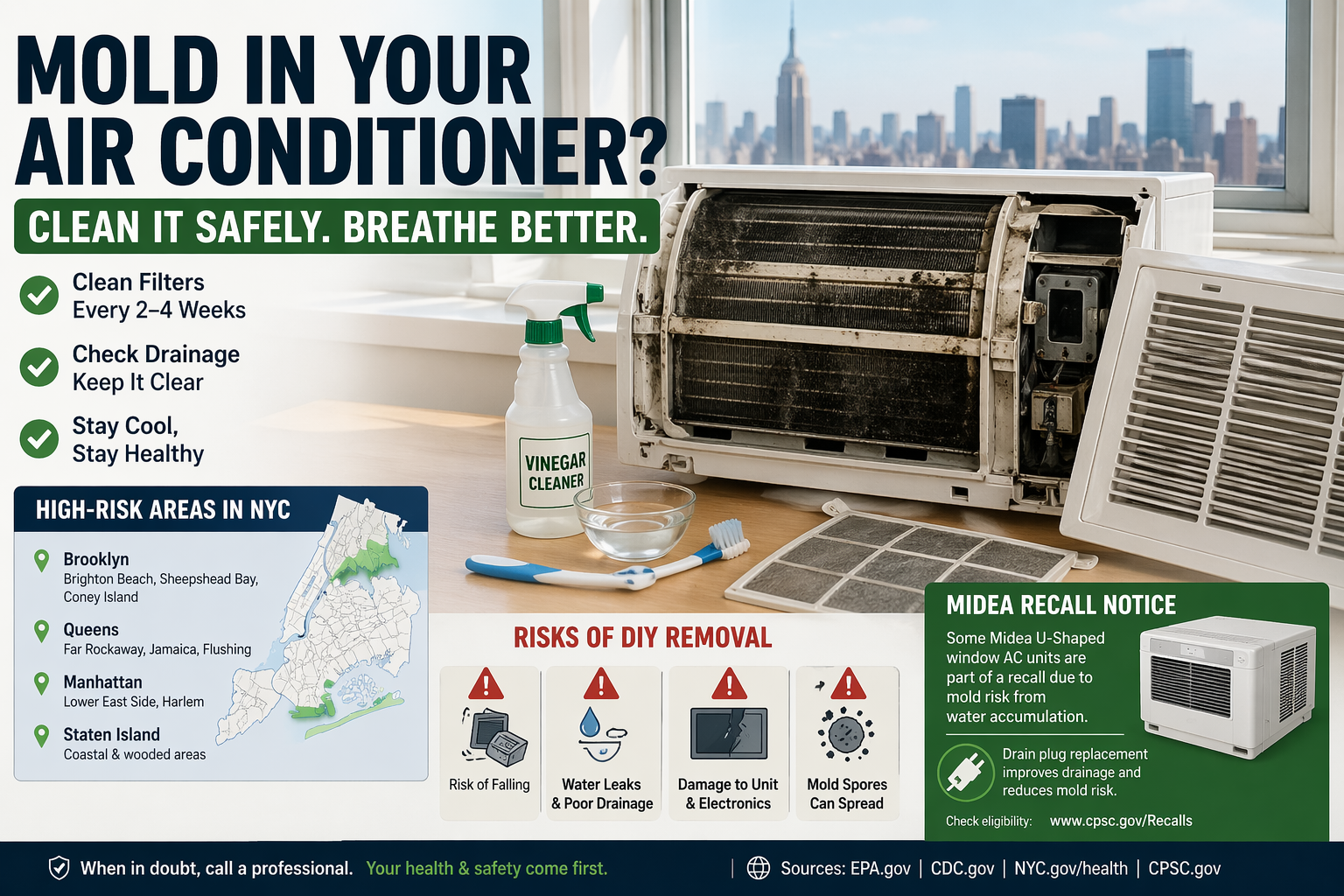
Mold in window air conditioners is a common issue in New York City, especially in areas with high humidity and dense urban living conditions. Many homeowners try to handle it themselves, but often underestimate the risks and limitations. In this article, we’ll explain how to safely clean your AC, which NYC areas are most prone to mold growth, and why DIY cleaning can sometimes be dangerous.
Why Mold Forms Inside Air Conditioners
Air conditioners create ideal conditions for mold growth:
-
- Moisture (condensation)
-
- Warm temperatures
-
- Dust and organic debris
If filters are not cleaned regularly and drainage is poor, water and dirt accumulate inside the unit — creating a perfect environment for mold.
According to the U.S. Environmental Protection Agency (EPA), mold thrives in environments with humidity above 60% and the presence of organic material:
https://www.epa.gov/mold
Areas in New York Where Mold Is More Likely to Form
The likelihood of mold depends on:
-
- Proximity to water
-
- Age of the building
-
- Poor ventilation
Most vulnerable areas:
1. Brooklyn (especially southern and coastal areas): Brighton Beach, Sheepshead Bay, Coney Island
These areas are affected by high humidity and salty ocean air.
2. Queens: Far Rockaway, Jamaica, Flushing
Many older buildings and ventilation issues contribute to mold growth.
3. Manhattan: Lower East Side, Harlem (older buildings), Brons
Older HVAC systems and drainage problems are common.
4. Staten Island: Homes near bays and wooded areas
Naturally higher humidity levels increase mold risk.
According to the NYC Department of Health, mold is more likely to develop in spaces with poor ventilation and elevated humidity:
https://www.nyc.gov/site/doh/health/health-topics/mold.page
How to Remove Mold from an Air Conditioner Yourself
If contamination is minor, you may attempt a careful cleaning.
Basic safe cleaning process:
-
- Unplug the unit
-
- Remove the front panel
-
- Take out and wash the filter (water + mild detergent)
-
- Wipe accessible surfaces
-
- Use a mild cleaning solution (such as vinegar or disinfectant)
-
- Let the unit dry completely before reassembly
The CDC recommends using protective gear (gloves, mask) when dealing with mold:
https://www.cdc.gov/mold/control_mold.htm
Why Removing an Air Conditioner from the Window Yourself Is Risky
Many people believe the best solution is to remove the unit, deep clean it, and reinstall it. This approach can be dangerous.
Key risks:
1. Risk of dropping the unit: Window AC units can weigh 50–100+ pounds. Improper removal can result in serious injury or damage. In NYC, window AC installation must comply with building safety regulations:
https://www.nyc.gov/site/buildings/index.page
2. Improper sealing and drainage issues. Incorrect reinstallation may cause:
-
- Water leaks inside the apartment
-
- Increased moisture buildup → more mold
3. Damage to internal components. Washing the unit internally with water may:
-
- Damage electronics
-
- Cause short circuits
4. Spread of mold spores. Without proper equipment:
-
- Mold spores can spread throughout the apartment
-
- Indoor air quality may worsen
The EPA warns that improper mold removal can increase contamination:
https://www.epa.gov/mold/mold-cleanup-your-home
When You Should NOT Clean Mold Yourself
Some Midea U-shaped window air conditioners were part of a recall due to mold risk caused by water accumulation.
According to the U.S. Consumer Product Safety Commission (CPSC):
https://www.cpsc.gov/Recalls
The recall program includes:
-
- Replacement of the drain plug
-
- Improved water drainage
-
- Reduced risk of mold formation
If you own one of these units, it is recommended to check eligibility and complete the recall upgrade instead of attempting DIY fixes.
Prevention: How to Avoid Mold in Your AC
To prevent mold growth:
-
- Ensure proper drainage
-
- Do not leave the unit off while wet
-
- Occasionally run fan mode to dry internal components
AC Mold NYC: Final Advice and Safety Guide
Removing mold from an air conditioner yourself is only safe in cases of minor contamination and with proper precautions. Attempting to fully remove or reinstall a unit without experience can lead to injury, equipment damage, and worsened indoor air quality.
In New York City, where humidity and building conditions often promote mold growth, proper installation, maintenance, and drainage management are essential.
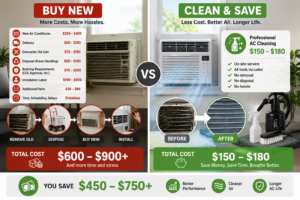
In many cases, it is safer and more cost-effective to hire professionals window ac installation — especially for deep cleaning or when dealing with recall-related issues.
FAQ
Is mold in a window air conditioner dangerous?
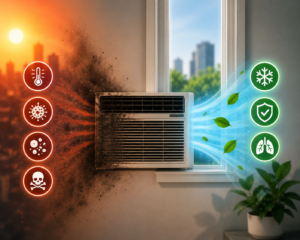
Mold in an air conditioner can cause respiratory issues, allergies, and unpleasant odors. In NYC apartments with high humidity, mold growth can spread quickly if not addressed.
Can I remove mold from my AC unit myself?
You can clean minor mold buildup, but removing a window AC unit improperly may lead to damage, water leaks, or safety risks. Professional window ac cleaning is recommended for heavy contamination.
Why is mold common in air conditioners in NYC?
High humidity, poor ventilation, and tightly sealed apartments in areas like Brooklyn, Queens, and Manhattan create ideal conditions for mold growth inside AC units.
How do I prevent mold in my window AC?
Regular cleaning, using fan mode to dry the unit, and ensuring proper drainage can help prevent mold buildup.
What is the Midea AC recall and how does it relate to mold?
The Midea U-shaped AC recall addressed drainage issues that could lead to water buildup and potential mold growth. Updated drain plug solutions help reduce this risk.