A Real Technical Explanation From a Company That Serviced Thousands of Units Across NYC
Over the past few years, Midea U-shaped air conditioners have become extremely popular in New York City apartments. Their quiet operation, energy efficiency, inverter technology, and modern window-friendly design made them one of the most discussed AC systems on the market.
At the same time, many customers began seeing online discussions and videos about possible mold growth, musty odors, and moisture buildup inside these units. Some people became genuinely concerned after reading alarming social media posts claiming that the systems were “dangerous” or “full of mold.”
As a company that worked directly with these systems across New York City on a very large scale, we believe it is important to explain what is actually happening technically, what problems were real, what improvements were made by the manufacturer, and what homeowners should realistically expect from any modern high-efficiency air conditioner.
Our company participated directly in the Midea-related service program and over the course of one summer alone we cleaned, repaired, serviced, and installed more than 6,000 Midea U-shaped air conditioners throughout NYC, including Manhattan, Brooklyn, Queens, Staten Island, and surrounding areas.
Because of this experience, we were able to observe these systems not in laboratory conditions, but in real apartments with:
closed windows, high humidity, pets, cooking grease, limited airflow, dust accumulation, and nonstop summer usage.
What we learned from servicing thousands of units is that the reality is far more nuanced than many internet discussions suggest.
Why Moisture Exists Inside Modern Window Air Conditioners
One of the biggest misconceptions online is that moisture inside an air conditioner automatically means something is defective.
In reality, all air conditioners naturally produce condensation during cooling. Removing humidity from the air is literally part of how air conditioning works.
Modern inverter-driven systems like the Midea U-shaped units operate differently from many older traditional window ACs. Older systems often expelled water aggressively outside and were significantly louder and less energy efficient.
Newer inverter systems are designed to:
reduce noise, improve efficiency, stabilize temperatures, and lower energy consumption.
Because of these design differences, some moisture may remain inside portions of the unit during operation. Under normal conditions this is not automatically dangerous.
However, problems may develop when moisture combines with:
dust, pet hair, cooking particles, organic debris, and lack of maintenance over long periods of time.
That combination can eventually contribute to:
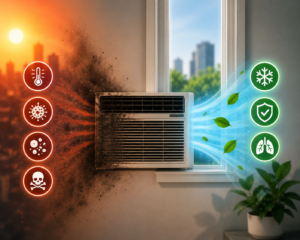
musty odors, bacterial growth, smell, mildew, and mold buildup inside internal components.
Importantly, this issue is not unique to Midea alone. Many modern high-efficiency AC systems from different manufacturers can develop similar conditions if they are heavily used and poorly maintained.
What We Observed in Real NYC Apartments
One thing the internet often ignores is how extreme NYC apartment conditions can be for window air conditioners.
Many apartments have:
very limited ventilation, windows that remain closed for months during heat waves, high humidity, heavy cooking usage, pets, dust accumulation from city streets, and air conditioners running nearly 24 hours a day.
In some apartments we serviced, the amount of internal contamination was significant not because of one isolated design issue, but because the systems had never been professionally cleaned despite operating continuously in difficult conditions.
We frequently found buildup consisting of:
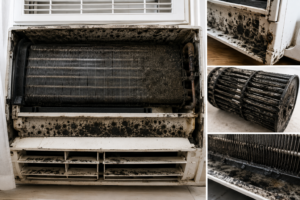
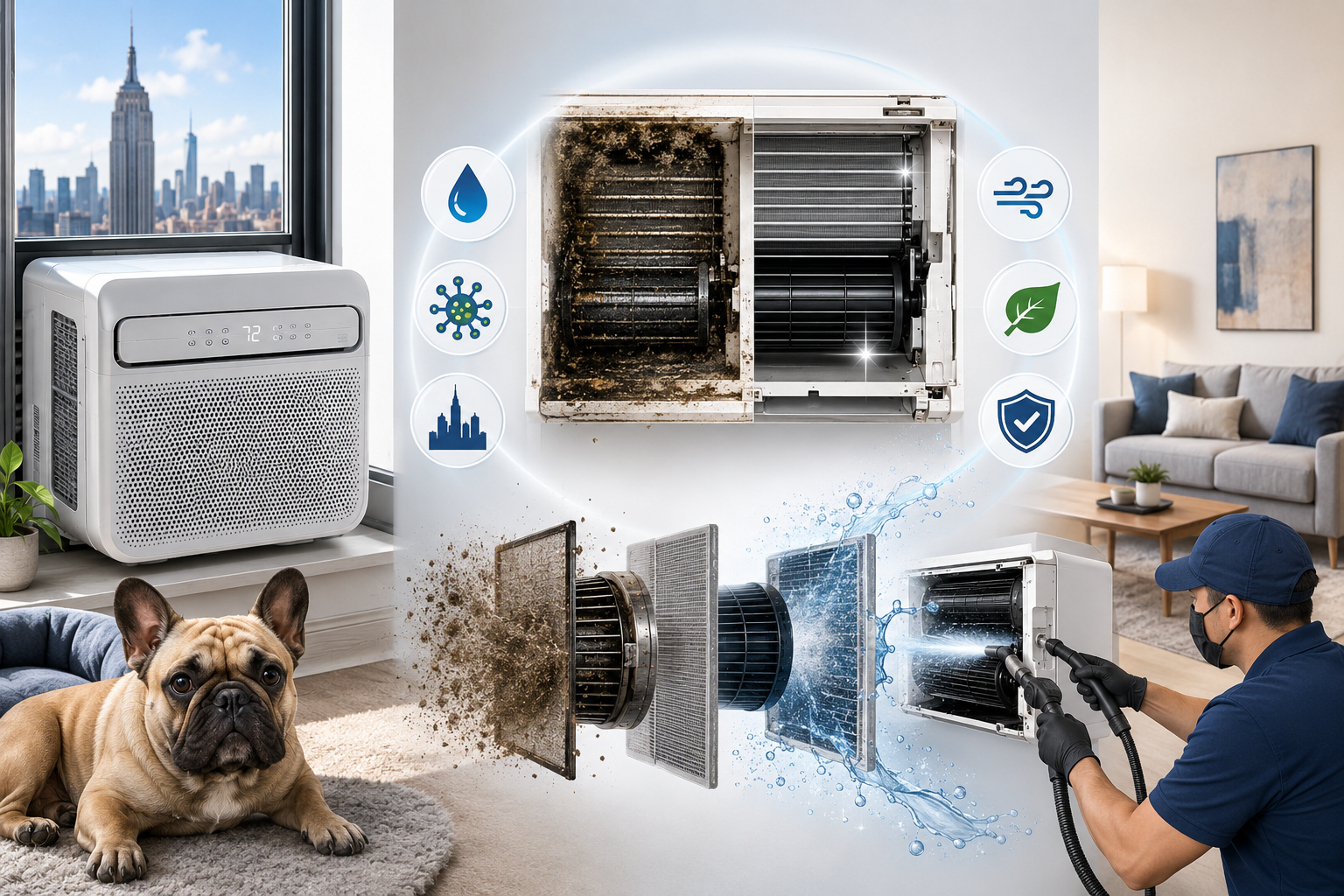
pet hair, grease residue, dust, mold spores, lint, and biological debris trapped deep inside evaporator coils and blower assemblies.
Some customers were shocked to learn that pets can even react to their own accumulated dander once it becomes trapped inside the air conditioner and continuously recirculated through the apartment.
This can be especially problematic for animals with allergies or respiratory sensitivity.
Concerns for Flat-Faced Dog Breeds
One important issue that many homeowners never consider is how poor indoor air quality may affect brachycephalic dog breeds such as:
French Bulldogs, Pugs, English Bulldogs, Boston Terriers, and similar flat-faced dogs.
These breeds already have naturally restricted airways and reduced breathing efficiency because of their anatomy.
When indoor air quality worsens due to:
dust buildup, mold spores, excessive humidity, dirty airflow, or biological contamination inside an AC system, these dogs may experience increased respiratory stress.
In some cases, poor indoor air quality may aggravate symptoms associated with brachycephalic airway syndrome, including:
heavy breathing, snoring, overheating, airway irritation, and difficulty regulating body temperature during hot weather.
This is one reason why maintaining clean airflow inside the apartment is important not only for comfort, but for the overall indoor environment.
What Midea Changed
Another fact that is often ignored online is that the manufacturer implemented updated drainage improvements.
Newer generations of Midea U-shaped units now come with updated drainage solutions and drain plug systems designed to improve water management and reduce excessive moisture accumulation inside the unit.
From our direct field experience, the updated systems perform noticeably better than earlier production batches when:
installed correctly, maintained properly, and cleaned regularly.
This is important because many alarming videos circulating online still reference earlier units or situations involving heavily neglected maintenance
Why Cleaning Still Matters Even With Updated Units
Even with improved drainage systems, no modern window air conditioner should be considered maintenance-free.
This is especially true in NYC apartments where systems often operate under constant heavy usage.
Over time, every AC system can accumulate:
dust, biological particles, moisture residue, pet hair, allergens, and organic debris.
Without periodic cleaning, that buildup may eventually affect:
airflow, odor, efficiency, indoor air quality, and overall system performance.
Many homeowners believe rinsing the front filter occasionally is enough. Unfortunately, the most contaminated parts of an air conditioner are usually hidden deep inside the system where standard household cleaning cannot reach.
The dirtiest areas are often:
evaporator coils, blower wheels, internal drainage channels, airflow compartments, and moisture retention areas.
Without proper disassembly and cleaning techniques, contamination may remain trapped inside the unit for years.
Why Professional Cleaning Is Important
After servicing thousands of Midea systems throughout New York City, our professional opinion is very straightforward:
most serious odor and contamination problems are strongly connected to neglected maintenance rather than simple day-to-day operation alone.
Professional cleaning helps remove contamination from internal areas homeowners usually cannot safely access themselves.
A properly cleaned system may help:
improve airflow, reduce odors, lower allergen circulation, remove accumulated pet hair, improve cooling performance, and reduce moisture-related buildup inside the unit.
Professional technicians can also inspect:
drainage systems, airflow restrictions, hidden contamination, moisture retention, and early signs of mechanical problems before they become more serious.
Improper DIY cleaning often fails to address the actual contaminated areas and may even worsen moisture problems if the system is not properly dried afterward.
Our Professional Opinion After Servicing More Than 6,000 Units
Based on our direct hands-on experience with more than 6,000 Midea U-shaped air conditioners throughout NYC, we believe these systems can perform extremely well when:
properly installed, professionally maintained, periodically cleaned, and monitored for drainage performance.
Like any modern high-efficiency air conditioner, they require maintenance — especially in demanding apartment environments with constant summer usage.
Most severe cases we encountered involved:
extremely dirty apartments, blocked airflow, long-term neglected maintenance, excessive pet hair buildup, or systems that had never been professionally cleaned.
Internet discussions often present the issue in an exaggerated and oversimplified way. The reality is that modern AC systems are sophisticated appliances operating in difficult indoor environments and regular maintenance remains essential regardless of brand.
The Real Issue Isn’t the Brand — It’s Maintenance
Midea U-shaped air conditioners remain one of the most innovative and energy-efficient window AC systems currently available for apartment living.
At the same time, homeowners should understand that:
any air conditioner exposed to constant humidity, dust, pet hair, and heavy NYC summer usage requires regular maintenance to continue operating properly.
The manufacturer has already implemented drainage improvements and updated newer-generation systems. However, even improved systems still benefit greatly from professional cleaning and periodic inspection.
In our experience, the best long-term approach is not fear or panic about internet videos, but proper installation, regular maintenance, and realistic understanding of how modern air conditioning systems actually work in real-world NYC apartments.
Can Midea U-shaped air conditioners develop mold?
Like any modern air conditioner, Midea U-shaped AC units can develop mold or mildew if moisture, dust, pet hair, and organic debris accumulate inside the system over time without proper maintenance and cleaning.
Why do some window air conditioners smell musty?
Musty odors are usually caused by moisture buildup combined with dust, bacteria, pet dander, or mold growth inside internal AC components such as evaporator coils and blower wheels.
Are Midea U-shaped air conditioners safe?
Yes. Based on our experience servicing thousands of units throughout NYC, Midea U-shaped air conditioners can perform very well when properly installed, maintained, and professionally cleaned.
Did Midea improve drainage issues in newer models?
Yes. Newer generations of Midea U-shaped air conditioners include updated drainage solutions and improved drain plug systems designed to reduce excessive moisture accumulation.
How often should a window air conditioner be professionally cleaned?
For heavy NYC summer usage, professional cleaning is generally recommended at least once per season, especially in apartments with pets, high humidity, cooking grease, or continuous AC operation.
Can pet hair affect air conditioner performance?
Yes. Pet hair and dander can accumulate deep inside the system, restrict airflow, contribute to odors, and worsen indoor air quality if the unit is not cleaned regularly.
Is cleaning the front filter enough?
Usually not. The dirtiest parts of a window AC are often located deep inside the system, including blower wheels, evaporator coils, and drainage channels that standard household cleaning cannot fully reach.
Can dirty AC systems affect indoor air quality?
Yes. Poorly maintained air conditioners may circulate dust, allergens, mold spores, pet dander, and biological contaminants throughout the apartment.
Why are NYC apartments harder on window air conditioners?
NYC apartments often have limited ventilation, high humidity, constant summer usage, cooking grease, pets, and dust accumulation, all of which increase contamination inside AC systems.
Can professional cleaning improve AC efficiency?
Yes. Professional cleaning may improve airflow, cooling performance, odor reduction, drainage performance, and overall system efficiency.