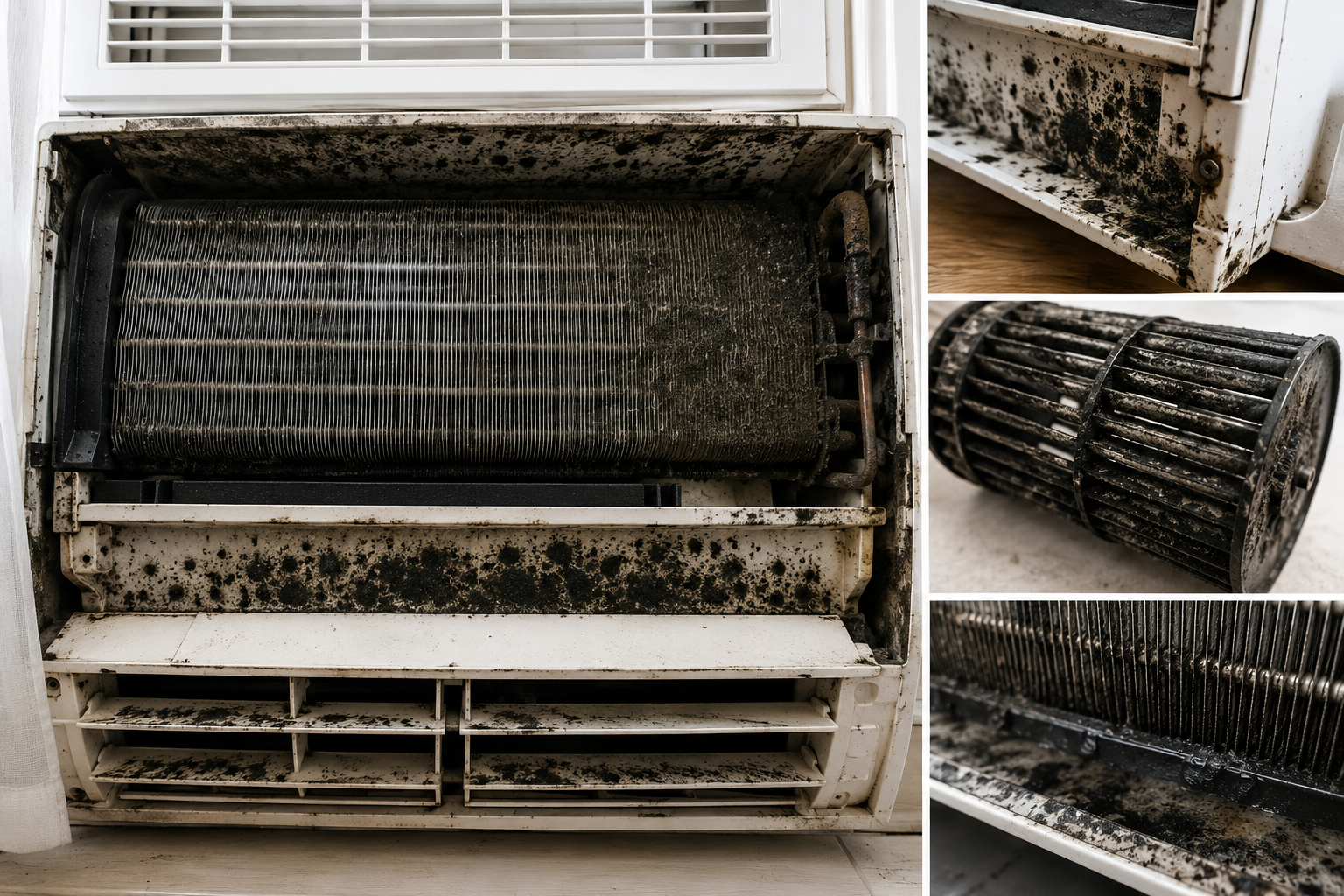
Why Window Air Conditioners in NYC Apartments Are Prone to Mold Growth
If your window air conditioner smells musty, blows dirty air, leaks water, or has dark spots near the vents, there is a good chance mold has started growing inside the unit. One of the most common and concerning problems in New York City apartments is black mold inside window AC systems. Many residents first notice it during the beginning of summer when they turn on the unit after months of inactivity and immediately smell a damp, sour odor coming from the vents.
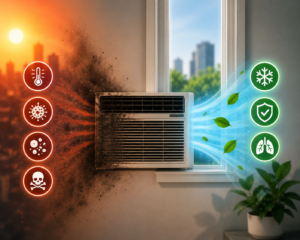
Unfortunately, this is not just a cosmetic issue. Mold inside an air conditioner can affect indoor air quality, trigger allergies, worsen asthma symptoms, and spread contaminants throughout the room every time the AC runs. In many cases, the problem becomes worse over time because most of the contamination is hidden deep inside the unit where regular homeowners cannot easily reach it.
At Mounting TV Service / AC Service NYC we regularly clean and service heavily contaminated window AC units across Manhattan, Brooklyn, Queens, Bronx, Staten Island, and nearby New Jersey areas. Over the years, we have seen that black mold problems are usually caused by a combination of improper installation, trapped moisture, poor drainage, dust buildup, and lack of professional maintenance.
Why Black Mold Develops Inside Window Air Conditioners
A window air conditioner constantly produces condensation during operation. Warm humid air passes over cold evaporator coils, creating moisture inside the system. Under normal conditions, that moisture drains safely outdoors. However, when the unit is installed incorrectly or airflow becomes restricted, water remains trapped inside the air conditioner. This creates the perfect environment for mold growth.
One of the biggest causes of mold problems in NYC is improper installation. Many units are installed without the correct tilt angle, meaning condensation water cannot drain properly toward the outside. Instead, water pools inside the base of the unit and keeps internal components wet for long periods of time. Even a small drainage issue can eventually lead to serious biological buildup inside the system.
Another major factor is dust accumulation. Dust particles become food for mold. Over time, dirt builds up on the evaporator coil, blower wheel, and internal housing. Once moisture mixes with this debris, fungal growth accelerates rapidly. This is especially common in apartments near busy streets, construction zones, or buildings with poor ventilation.
Humidity inside New York apartments also plays a major role. Steam from kitchens, small enclosed bedrooms, poor air circulation, and humid summer weather create ideal conditions for mold development. In many older NYC buildings, airflow is limited and moisture levels remain elevated throughout the season, making the problem even worse.
Why Modern Window AC Units Are More Prone to Mold Problems
Many homeowners are surprised to learn that newer inverter and energy-efficient window air conditioners can actually develop mold faster than some older systems. Modern units are designed to operate more quietly and efficiently. Because of this, fan speeds often remain lower and internal components stay wet longer after the cooling cycle ends.
This issue became especially noticeable with newer U-shaped and inverter-style air conditioners. These systems are extremely energy efficient, but their internal design sometimes allows moisture to remain trapped around the evaporator and blower assembly longer than traditional designs. Without regular cleaning and proper drainage, mold can begin forming surprisingly quickly.
Signs Your Window Air Conditioner May Have Mold
The most common warning sign is a musty or sour smell coming from the unit. Many people describe the odor as similar to a damp basement or wet towel. The smell is often strongest when the AC first turns on after sitting unused overnight.
Another common symptom is visible black residue around the air vents or louvers. In some cases, dark spots begin appearing on nearby walls or window frames due to excessive moisture and contaminated airflow.
Reduced airflow is also common. Mold and debris collect on the blower wheel and evaporator coil, restricting air movement and reducing cooling performance. Many homeowners assume the AC is simply “getting old” when in reality the internal components are heavily contaminated.
Water leaks are another major indicator. If condensation cannot drain properly, water may drip indoors or collect around the unit. Persistent leaks almost always increase the risk of mold growth inside the system.
Some families first discover the problem because of health symptoms. Increased coughing, allergies, headaches, sinus irritation, or asthma flare-ups that worsen when the AC is running can all be signs of contamination inside the unit.
What Is “Black Mold” Inside an Air Conditioner?
Many homeowners use the term “black mold” to describe any dark contamination inside an air conditioner. However, mold inside HVAC and window AC systems can actually appear in several different colors, including:
-
- black, dark, gray, ,green, olive, brown, or even white.
The color alone does not always determine how dangerous the mold is.
In many air conditioners, the dark buildup people see is a combination of:
-
- fungal colonies, dust, moisture,
-
- bacteria, and biofilm accumulation.
One of the mold species commonly associated with “black mold” is Stachybotrys chartarum, which can develop in consistently wet environments. However, HVAC systems and window air conditioners more commonly contain other moisture-related fungi such as:
-
- Cladosporium, Aspergillus, and Penicillium species.
These organisms thrive in:
-
- humid environments, trapped condensation, poor drainage conditions, and dirty evaporator coils.
Even when the mold is not technically toxic black mold, microbial growth inside an air conditioner can still negatively affect indoor air quality and may contribute to:
-
- allergy symptoms, respiratory irritation,
-
- coughing, headaches, sinus discomfort, and unpleasant odors.
This is why visible mold growth or persistent musty smells inside a window AC unit should never be ignored.
Proven Methods Used to Remove and Prevent Black Mold in Window AC Units
Many homeowners believe there is a single chemical spray that can permanently eliminate black mold inside an air conditioner. In reality, mold remediation experts and HVAC professionals agree that successful mold control requires much more than simply spraying bleach into the vents. According to guidance from organizations such as the EPA and CDC, the most effective approach involves removing moisture, physically cleaning contaminated surfaces, restoring proper drainage, and preventing future humidity buildup.
One of the most important steps is deep physical cleaning. Mold inside a window AC often develops on the evaporator coil, blower wheel, drain channels, and internal housing where dirt, moisture, and biological buildup accumulate over time. Simply spraying disinfectant through the front grille usually does not remove the underlying contamination. Professional cleaning may require partial disassembly of the unit to properly access hidden areas where fungal growth develops.
Controlling moisture is equally important. Black mold commonly appears when condensation water becomes trapped inside the system due to improper installation, poor drainage angle, clogged drain channels, or restricted airflow. Correct installation and proper rear tilt help water drain outdoors instead of remaining inside the unit. Without correcting the moisture problem, mold often returns even after cleaning.
Several cleaning solutions are commonly used during mold remediation. Hydrogen peroxide is widely used because it can help break down biological buildup while producing fewer harsh fumes than bleach. White vinegar is also frequently recommended because acidic solutions may help disrupt fungal growth on many surfaces. Professional HVAC technicians often use EPA-registered antimicrobial coil cleaners specifically designed for evaporator systems and internal AC components.
Interestingly, bleach is no longer considered the ideal solution in many mold remediation situations. The EPA notes that bleach may only remove surface contamination while failing to fully penetrate deeper biological buildup. In HVAC systems, bleach can also create strong fumes and potentially damage certain internal components if used improperly.
Long-term prevention is usually more important than temporary cleaning. Regular filter cleaning, seasonal maintenance, maintaining proper airflow, controlling indoor humidity, correcting drainage problems, and professionally cleaning the unit before heavy summer use can significantly reduce the risk of recurring mold growth inside window air conditioners.
There is no single “magic spray” that permanently eliminates black mold inside an air conditioner. Successful mold control requires moisture correction, deep cleaning, airflow management, and proper maintenance.
Can Black Mold in an AC Be Dangerous?
Mold inside an air conditioner should not be ignored. Every time the system runs, it circulates air through contaminated internal components. Even if the mold is not technically classified as toxic “black mold,” fungal buildup can still negatively affect indoor air quality and respiratory comfort.
Children, elderly residents, and people with asthma or allergies are especially sensitive. Many NYC residents spend long hours indoors during summer heat waves with windows closed, meaning contaminated air continuously recirculates throughout the apartment.
Why Some NYC Neighborhoods Experience More Window AC Mold Problems
Certain areas of New York City may experience higher rates of window AC mold problems due to building age, humidity levels, ventilation limitations, and apartment layouts. Older buildings in parts of Brooklyn, Manhattan, Queens, and the Bronx often have smaller rooms, limited airflow, steam buildup from kitchens, and older window structures that may trap moisture around air conditioners.
Neighborhoods closer to waterfront areas or locations with elevated humidity may also experience increased condensation inside window AC systems during summer heat waves. Apartments in basement levels, poorly ventilated bedrooms, and buildings with older insulation or window frames may be especially vulnerable to moisture accumulation and recurring mold growth inside air conditioners.
In many NYC apartments, air conditioners operate continuously during extreme summer temperatures with windows closed for long periods of time. Without proper drainage, seasonal cleaning, and correct installation, these conditions may create an ideal environment for mold, mildew, and biological buildup inside the unit.
Why DIY Cleaning Often Does Not Solve the Problem
Many homeowners attempt to fix mold issues using sprays or surface cleaning. Unfortunately, most DIY cleaning only reaches the front filter and visible plastic surfaces. The actual contamination is usually hidden much deeper inside the system.
The blower wheel, evaporator coil, drain channels, and rear internal housing are often the most heavily contaminated areas. Spraying disinfectant through the front grille rarely removes the underlying buildup. In some situations, improper DIY cleaning can even damage delicate aluminum coil fins or electrical components.
This is why many units continue smelling musty even after repeated filter cleaning.
The Importance of Professional AC Cleaning
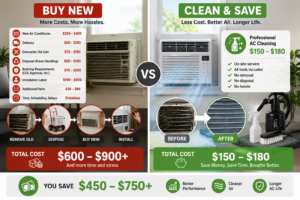
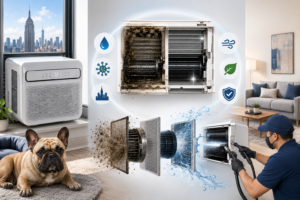
Professional window AC cleaning involves much more than simply rinsing the filter. A proper deep cleaning may require partial disassembly of the unit to access hidden contaminated sections. Internal coil cleaning, blower wheel treatment, drain channel restoration, and airflow inspection are all important parts of the process.
In many cases, technicians also discover installation problems contributing to the mold issue. Improper tilt, blocked drainage paths, insufficient support, or restricted airflow around the unit can all accelerate future contamination if left uncorrected.
Proper installation is one of the most overlooked factors in mold prevention. A professionally installed window AC should drain efficiently, maintain stable airflow, and minimize internal moisture retention. Even high-quality air conditioners can develop severe mold problems if installed incorrectly.
How to Reduce the Risk of Mold in Your Window AC
Preventive maintenance is extremely important. Filters should be cleaned regularly during heavy summer use. Running the fan-only mode occasionally can help dry internal moisture after cooling cycles. Airflow around the unit should remain unobstructed, and the exterior drainage path should never be blocked.
Seasonal professional cleaning is one of the best ways to prevent major contamination from developing. Many NYC residents wait until the odor becomes severe before servicing the unit, but by that point the internal buildup is often extensive.
Professional Window AC Cleaning & Installation in NYC
At Mounting TV Service / AC Service NYC we provide professional:
-
- window AC cleaning, mold removal cleaning, drainage correction, leak diagnostics,
-
- seasonal maintenance, and window AC installation services
throughout New York City and nearby New Jersey.
- seasonal maintenance, and window AC installation services
We regularly service:
-
- standard window AC systems,
-
- inverter models,
-
- U-shaped units,
-
- Midea-style air conditioners,
-
- and through-the-wall systems.
If your air conditioner smells musty, leaks water, or shows signs of mold contamination, professional cleaning and proper installation correction can significantly improve both air quality and system performance.
📞 929-732-3000